Mon-Fri 4:30AM-10:00PM | Sat-Sun 6:00AM-8:00PM

You step on a toy someone left in the hallway, or a dog darts in front of you on a walk. For a split second, your body has to catch up after it's already been thrown off. Most of us think of good balance as standing still without a wobble, but moments like these call for something else entirely.
Catching yourself is its own skill, and it deserves a spot on your checklist when you compare wellness programs for senior citizens in Vacaville. Below, we'll walk through what your body does right after a stumble and why recovering your balance matters for the moments you don't see coming.
The moment your stability slips, your body has a very short window to respond before momentum carries you even further off course. Sometimes a small shift is all it takes. A bigger bump might mean your feet have to move.
Your body is always making tiny corrections as your weight shifts, even when you're just walking across the kitchen. Losing your balance means those little corrections can't keep up anymore.
When your weight drifts too far past your feet, staying put stops being an option. That's when a quick step gets your feet back underneath you, giving you a new base and a second chance to steady yourself. Holding still is only half of what balance is about. Your body also needs a plan for after you've already been knocked off-center.
Your brain has to notice the shift and figure out the next move, fast. Thinking while the body is moving matters here, because you're rarely focused on balance alone when you lose it. Most of the time you're chatting with someone or carrying groceries when your footing changes. Your body still has to respond the right way, even with your mind somewhere else.
Your body needs enough physical capacity to pull off whatever response the moment calls for. Strength produces the movement, and balance keeps it under control.
What body weight cannot reveal about muscle starts to matter when you think about how much work a quick recovery step takes. The scale tells you how much you weigh, not how much of that is muscle. That's why strength work deserves a place right alongside balance training.
A stumble changes the job from staying steady to getting steady again. Your body may need to reposition fast enough to keep a wobble from turning into a fall.
Being good at recovering from balance disturbances isn't the same as being good at standing still. Once you're already tipping, your body needs a response that brings you back under control.
If you need to take a step, your legs have to be strong enough to get your feet where they need to go, quickly. General balance practice sharpens your control. Strength is what gets your foot down in time. Our Longevity Warriors classes work on both every week.
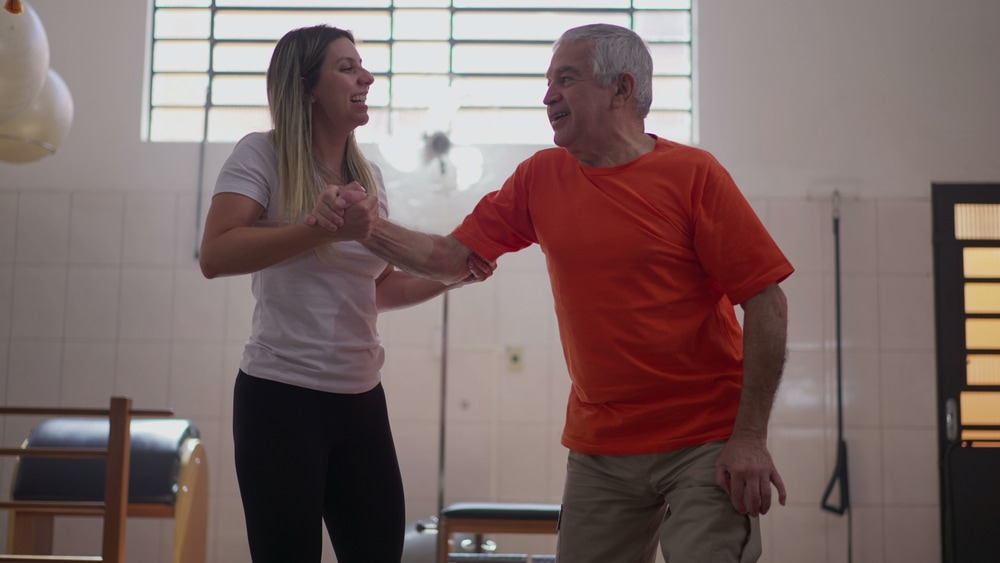
Harder doesn't automatically mean better. If you can't stay in control during an exercise, it needs to be adjusted. Our coaches can modify a movement or give you extra support, like a chair or rail to hold onto. And in a small group, you get real guidance while a new movement starts to feel familiar.
Balance practice pays off because life tests your stability all the time, long after class is over. Climbing out of the car or reaching for something on a high shelf both ask your body to stay steady while it's moving. The closer your training gets to moments like those, the more useful it is.
The ground isn't always as predictable as we'd like. A wet patch of grass or a gravel path can make you adjust mid-step, even on a walk you've taken a hundred times. Training can't make those moments go away. It can give you a coached, structured place to keep working on your strength and balance.
Bringing guided classes into residential communities means people can practice right where they already live. Through our community partnership option, we run coached group sessions on-site, so residents don't have to make the trip to our gym.

Working on balance goes a lot better when someone has your back. At Maximum Fitness, our small-group classes keep a coach close by, and every exercise can be adjusted to where you are today. You practice tricky moves in a room set up for it instead of guessing your way through them at home. The goal is for that work to show up in everyday life, from moving around the house to a stroll at Peña Adobe. Your first week is free, so you can try a class before committing to anything. Call us and tell us where you're starting.
.png)