Mon-Fri 4:30AM-10:00PM | Sat-Sun 6:00AM-8:00PM

Maximum velocity workout for athletes in Vacaville is often talked about like it’s a simple switch: sprint more, get faster. But athletes quickly learn that top-end speed isn’t just horsepower. It’s timing, rhythm, and the ability to hit the ground in the right place at the right moment, over and over, without your mechanics falling apart. That’s coordination. And at high speeds, coordination is what separates “fast in a straight line” from “fast and in all conditions.”
When you sprint, you’re upright, legs moving quickly, and relying on elastic rebound through the ankle and foot. The margins are tiny. A slightly late arm swing, a foot landing too far in front of the hips, or a torso that rotates off-center can bleed speed instantly. Coordination is what keeps everything stacked and synced so you can produce force efficiently and stay smooth under pressure. In other words, coordination turns speed into control. This blog breaks down why coordination matters for athletes, what training develops it best, and the performance benefits you can expect when you build it on purpose.
Coordination is your ability to organize movement efficiently, especially when intensity goes up or the environment gets unpredictable. It’s not just “being athletic.” It’s the nervous system’s skill at sequencing muscles, controlling joint positions, and keeping rhythm while you accelerate, decelerate, jump, land, cut, or sprint. Coordination is the difference between sprinting with clean, snappy contacts and sprinting like you’re fighting your own body. Better coordination also improves how quickly you can adapt to a cue, maintain posture under fatigue, and express strength at game speed.
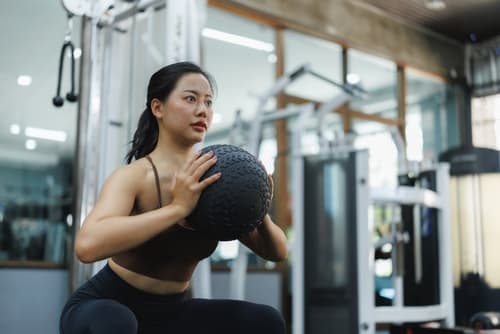
The best coordination training is simple in concept: challenge control first, then raise speed. You’re teaching the nervous system to stay calm while the body moves fast. Here are the most effective categories, and how to use them like a pro.
Balance work improves your ability to stabilize the ankle, knee, and hip, which matters when you’re sprinting or changing direction at high velocity. Strong balance skill reduces “leaks” in your mechanics and can lower injury risk because your joints learn to hold alignment when forces spike.
Sports are full of timing problems: catching, striking, trapping, dribbling, or simply placing your foot correctly during a cut. Hand-eye drills like ball tosses against a wall, reaction catches, or partner mirror games improve decision speed and precision.
Plyometrics train the stretch-shortening cycle, the quick “load and explode” pattern that shows up in sprinting, jumping, and cutting. Tuck jumps teach stiffness and quick ground contacts. Lateral plyometric jumps add side-to-side control and hip stability. Box drills can develop rhythm and reactivity if you keep them crisp.
Complex movement patterns build coordination by forcing multiple joints to work together with timing and sequencing. Multi-directional running teaches the body to transition between acceleration angles. Skipping reinforces rhythm, posture, and elastic rebound. Cross-step running challenges trunk control and hip mobility while moving laterally.
Coordination training pays off in ways athletes feel immediately, and in ways coaches notice on film.
Better coordination means fewer wasted steps, cleaner foot placement, and more consistent mechanics across reps. Your sprint stride looks smoother, your cuts are sharper, and your jumps are more repeatable.
When your body is coordinated, you stop fighting yourself. You spend less energy on unnecessary tension, extra steps, and messy transitions. That matters in maximum velocity work, where even small inefficiencies drain speed.
.jpg)
Coordination is the foundation of skill execution at speed. Whether it’s sprint mechanics, ball skills, or change-of-direction technique, coordination accelerates learning. Movements become more automatic, which frees up attention for reading the play instead of thinking about your feet.
Many injuries happen when athletes can’t control joint positions during fast actions, like landing poorly, braking with a collapsed knee, or cutting with the hips out of sync. Coordination training improves body awareness and reinforces stable movement patterns under load.
If you’re looking to channel raw top-end speed into precise, controlled movements that demand split-second body awareness and synchronization, Maximum Fitness is the best training facility in Solano County and the surrounding area. Our team of supportive D1 athletes will help you maintain maximum velocity through complex patterns, enhancing proprioception, joint stability, and neural timing for seamless transitions.
Whether you’re looking to boost your body’s movement dexterity, turbocharge your explosive potential, or work on amping your raw speed, we can help you turn raw potential into athletic mastery that bolsters eccentric control and minimizes injury risk during high-velocity maneuvers. Book a session at our cutting-edge fitness center, and we’ll build your coordination so it shows up when the game gets fast. Call us today!
.png)